01 Background
The resources are there.
They just aren't being used.
Kurosaki has a history as a post town on the old Nagasaki Kaido, is home to a mix of generations, and keeps gaining new residents as housing development continues. Its train station also ranks among the busiest in Kitakyushu by passenger numbers.
At the same time, large commercial facilities have kept pulling out, and daytime foot traffic has thinned. Vacant shops and empty houses sit unused, and there are few places a parent and child can drop into together. New residents have no obvious way to get involved in the community. Potential and challenges live side by side, in the same place.
- POTENTIAL
Station passenger numbers / The history and culture of the old Nagasaki Kaido / A mix of generations living here / Growing numbers of new residents from housing development / Distinctive independent shops
- ISSUE
Unused vacant shops and houses / Low daytime foot traffic / Large commercial facilities pulling out / A shortage of shops for parents and children / New residents finding it hard to get involved
02 The future we want
Toward a town where personality
seeps into everyday life.
People who live in or visit Kurosaki express themselves in the town's open spaces. People connect there. That is the picture of the town we set out to draw.
An office worker holds an exhibition or a pop-up stall in a vacant shop on the weekend. Someone who never used to join the local festival finds a role as an extension of their hobby. A parent and child walk through town, and conversation happens. We came to believe it isn't a large redevelopment, but the accumulation of activities like these, one by one, that gives a town its personality.
Into the town's open spaces,
someone's "I want to make this" finds a way in.
03 The memory of this place
Sewing machines
once lined this room.
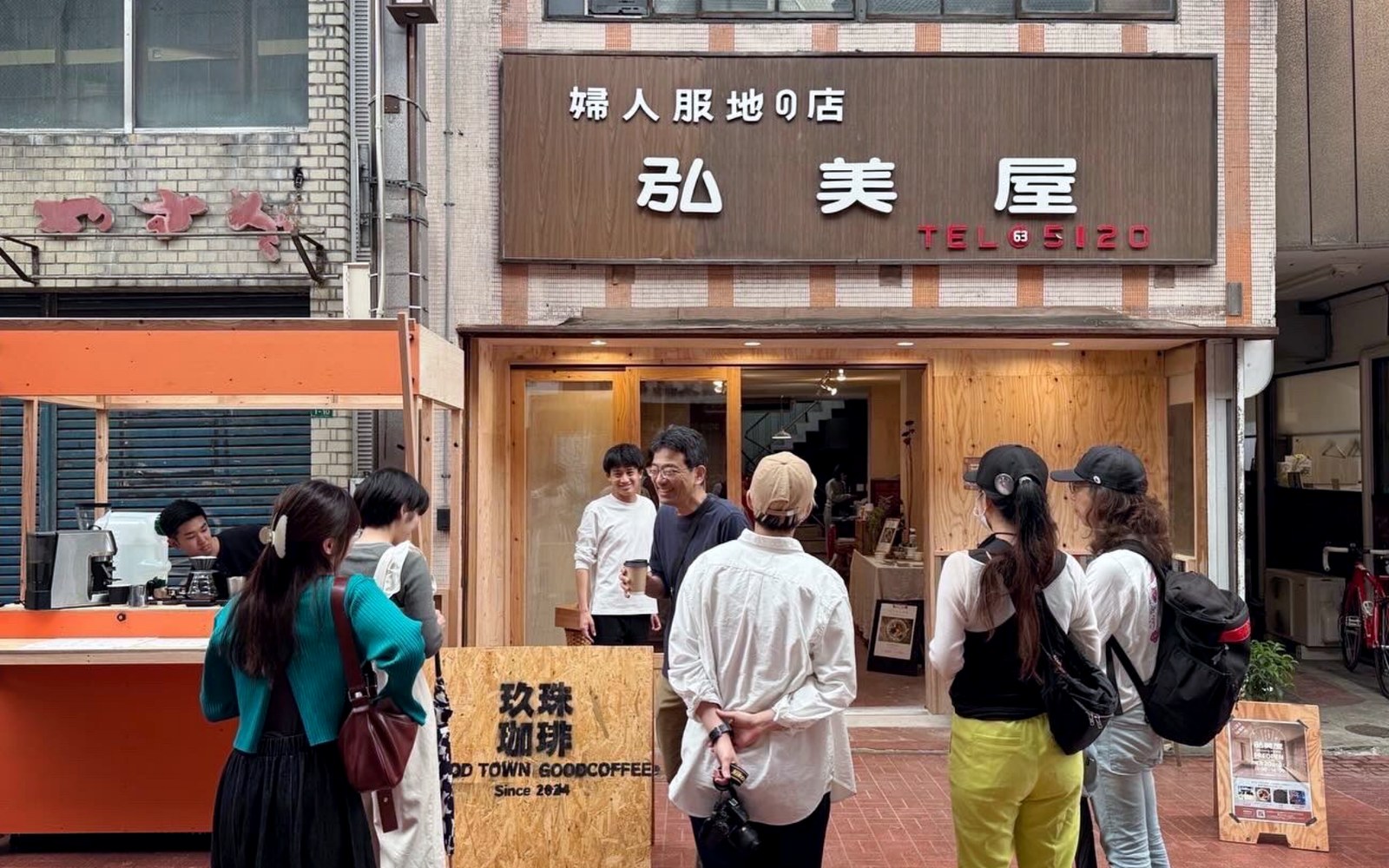
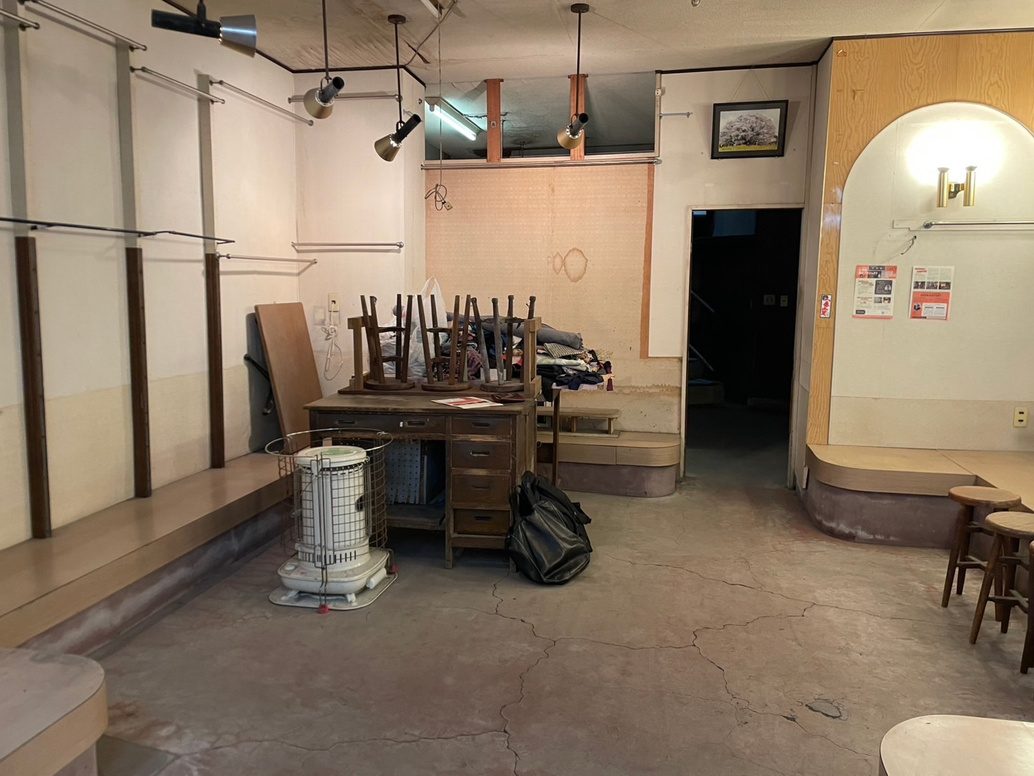
This site was once home to a women's fabric shop called Hiromiya. Sewing machines lined the back of the store, people gathered, and clothes were made. Fabric was chosen, thread was sewn, and someone slipped an arm through a sleeve. This was a place where "making things" lived as part of everyday scenery.
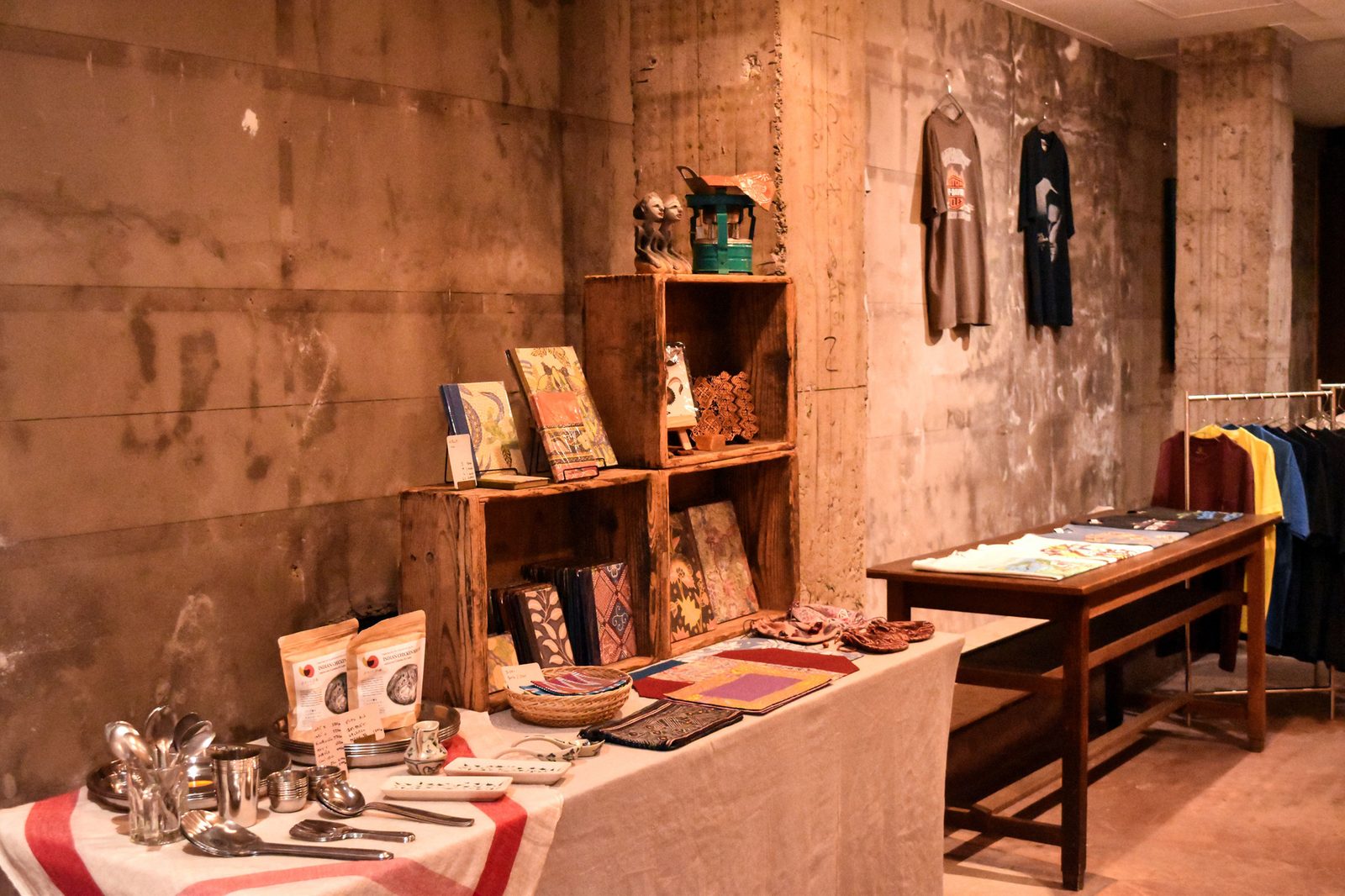
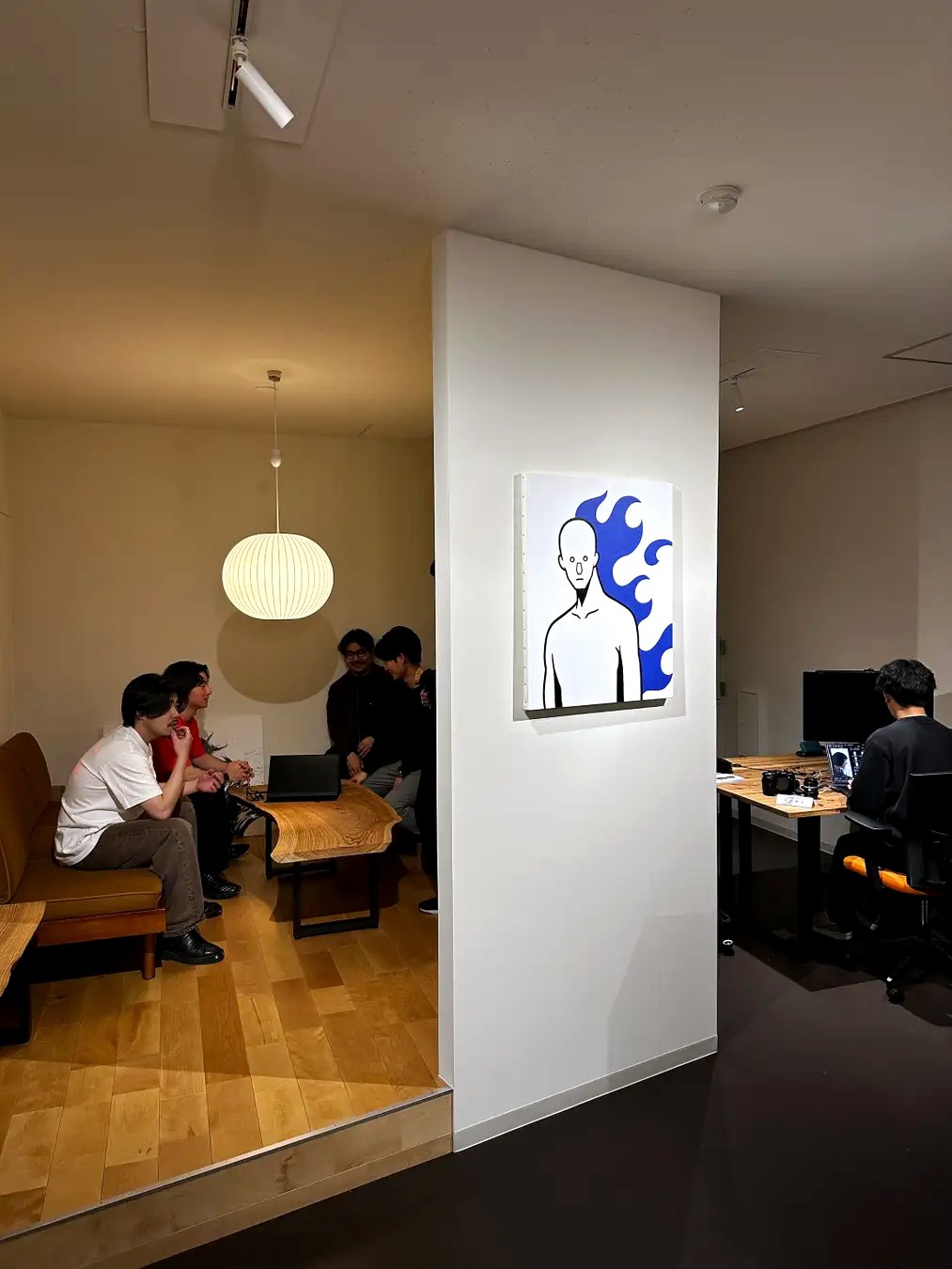
We made that memory the starting point of the renovation. Rather than swap in a new use, we chose to carry forward what once happened here, in a different form. A space lined with tools and books, like catching a glimpse into the workroom of an architect, editor, or designer. We named it "HIROMIYA ROOMS."
BEFORE / AFTER We stripped away the finishes and left the structure, and traces of its past, exposed. Measurements pencilled on the walls and old repair marks were treated as features to show, not erase.
04 How we proceeded
We didn't stop
at building it.
Rather than hand the project off once the renovation was finished, we planned the operation after opening as part of one continuous process. We split 2025 into four phases, building a base of people ready to use the space before the space itself was even done.
PHASE 01
Renovation / 2025.3 — 5
We stripped out the existing interior and finished it with the structure left exposed. The fixtures are movable, so the layout can change to suit whatever is being sold.
PHASE 02
Pre-opening event / 2025.5
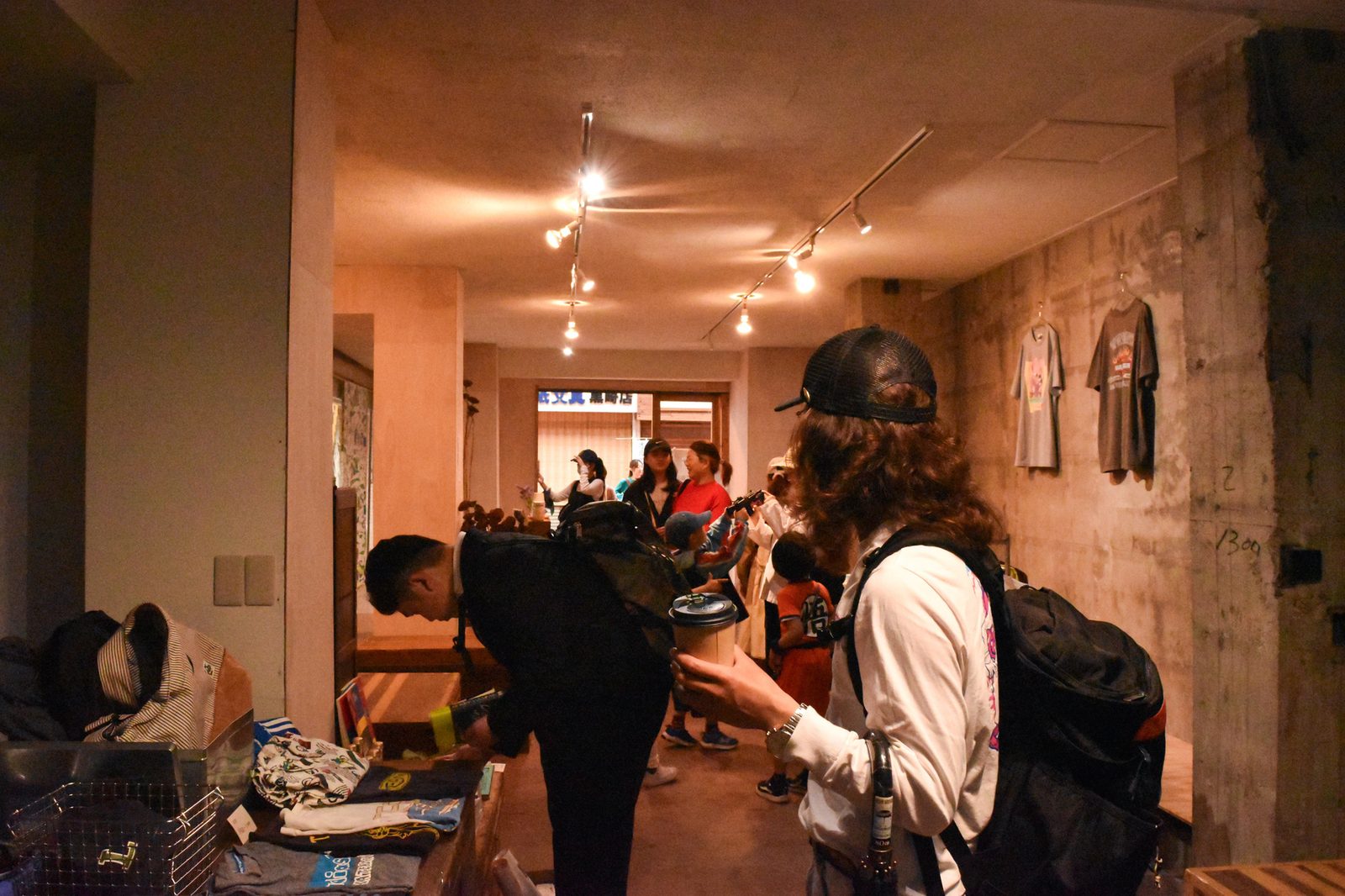
Before the official opening, we held an event so people from the town could see the space. Many who came went on to become vendors or collaborators.
PHASE 03
Challenge Shop programme / 2025.6 —
We opened up spaces that can be rented by the day. Coffee, secondhand clothes, books. Our priority was creating a way for people to try something small, first.
PHASE 04
Hands-on support for small businesses / 2025.7 —
Beyond simply renting out space, we took on recruiting vendors, planning events, and getting the word out locally. This support exists to turn a one-off pop-up into a next step.
05 The mechanism
A place you can try out,
starting from just one day.
The barrier to opening a shop is, in most cases, not money but the weight of procedure. Finding a property, negotiating, signing a contract, fitting out the interior — if you have to do all of that before you can try even once, the challenge never begins.
So we designed a system for renting out spaces by the day. In addition to spots inside the shop, vendors can also set up as a stall under the eaves. Try it once; if it feels right, keep going. Keep going, and regulars follow. Our priority was making it possible to start in that order.
What we, as operators, take on is providing the space, recruiting vendors, planning events, and spreading the word locally. That leaves vendors free to concentrate on their own products.
Make the first step
as light as possible.
06 The evidence
Towns where independent shops cluster
share certain conditions.
This approach isn't a hunch. Our CEO, Tomokazu Iwabuchi, researched the factors behind area revitalization driven by clusters of small independent shops at Kyushu University Graduate School, and this project is built on those findings.
Ropponmatsu in Fukuoka City, Uenouradori in Kumamoto City, Nakazakicho in Kita-ku, Osaka City. All three were once residential areas with plenty of vacant properties, or streets with little bustle. Over a few decades, each transformed into a popular area home to a wide variety of independent shops. Three conditions were common to all of them.
- CONDITION 01
Vacant properties that can be renovated
- CONDITION 02
A mix of distinctive independent shops across different trades
- CONDITION 03
Efforts that turn individual points into a connected area
One more thing the research surfaced was the role of what could be called a "community carpenter." Rather than building strictly to the drawings, they work things out on-site with the client and their circle. Friends of the client, and total amateurs, join in along the way, and the people who took part show up again at the next site. Through the medium of building spaces, a network of people spreads across the whole town.
A space shaped by people with clear values draws in others who share those values. The result is a neighbourhood formed by a resonance of shared values. It wasn't speed or capital, but time steeped in relationships, that produced the appeal of these shop clusters. That is the insight behind why we carried out Hiromiya's renovation with our own hands.
07 Connecting it onward
Turning one property
into a mechanism for the whole town.
We haven't treated Hiromiya as a standalone revitalization project that ends here. We've positioned the "try a place from just one day" mechanism we ran here as the starting point for proving out our in-house product, Placebook.
Starting at Hiromiya, we're expanding to Kumade-dori, and then to the wider Kurosaki area. As a history of pop-up vendors accumulates on the map, it becomes possible to see which trades suit which areas. For shopping streets and municipal governments, that becomes material for decisions about putting vacant properties to use, or attracting new tenants.
Alongside this, we ran a publishing project called "MAGAZINE Q" to spread the word about Kurosaki's appeal. Framed as a magazine that scoops up the deeper layers of a city, we've linked it with town-walk events, too. Place, mechanism, and medium — by combining the three, we aimed to connect the revitalization of a single property to movement across the whole town.
08 How we'll stay involved
From one shop
to the whole street.
Hiromiya's day-to-day operations have been handed over to Future-Making Lab. What we take on from here is expanding the mechanism we proved out here across Kumade-dori and the whole of central Kurosaki.
The shopping street still has shuttered storefronts and buildings with no one living in them. Owners are cautious about renting them out, and people who want to rent can't find their way to the properties. To close this gap, we use Placebook.
- Vacant shops
Put unused spaces on the map and make them available to try from a single day. The system itself handles contracts, payment, and vetting vendors, removing the hassle for owners
- Vacant houses
Make visible the potential of buildings left standing in the town centre, so the properties best suited to revitalization can be prioritized
- Shopping streets
Make it visible, from the history of pop-up vendors, which trades are gathering in which area — accumulated in a form usable as material for events and tenant recruitment
So that a pop-up doesn't end as a one-off, we've designed the system to leave a track record and reviews behind. Someone takes their first step at Hiromiya, then moves on to a vacant shop on the street, and eventually to a shop of their own. We see our role as smoothing out those steps.
Not just renting out a place —
staying involved so the next step keeps happening.
09 With the community
We are still,
in a sense, outsiders here.
Operations have been handed over to Future-Making Lab (a general incorporated association), and the work continues to expand — revitalizing the old Nagasaki Kaido, running events in partnership with the shopping street and community, and building places to belong, morning and night.
As this work has progressed, gaps in basic infrastructure have also come into view. Restrooms, for example. Now that food trucks appear on the shopping street and more people are stopping by, we're asked more and more often, "where's the restroom?" There are facilities at Kurosaki Station and Sankaku Park, but they're still not enough across the wider area, starting with around Kumade-dori.
For bustle and longer stays to take root, facilities like these need to be worked out together, across the whole community. We're still outsiders here, in a sense, and there's real uncertainty in us about whether we can fit into the community. That's exactly why we want to keep learning about this place, and keep getting involved in its gatherings and activities.
PROJECT TEAM
This project didn't start as a company initiative. It began when three people of the same generation, who met through community-building activities, each started moving in their own individual capacity: Onogi, who works on vacant-house revitalization and place-making; Edamitsu, who leads production and design; and URBANIX's CEO, Iwabuchi. URBANIX handled the initial planning and early funding, and day-to-day operations are now carried on by Future-Making Lab, a general incorporated association.